



Gravitational Theory
ABOUT OUR RESEARCH
Our research is focused on general relativity and its applications in astrophysics and geodesy as well as relations to quantum physics. This includes astrophysical extreme mass ratio systems and accretion disks around black holes as well as investigations of relativistic effects on the motion of satellites. The relativistic effects in rates of clocks on Earth and in space are crucial e.g. for height determination in geodesy. Moreover, we study fundamental problems in electrodynamics and in alternative theories of gravity.
Our fields of research
- Dynamics of light, particles (stars), and fluids in relativistic spacetimes using mostly analytical techniques
- Applications in relativistic astrophysics: extreme mass ratio systems, pulsar timing, accretion disks, gravitational lensing
- Tests of gravity: investigation of relativistic effects on satellites orbiting the Earth as well as Earth- or space-based clocks
- Relativistic geodesy: basic notions in General Relativity (GR), new concepts using the additional gravity degrees of freedom in GR; related topics are synchronisation and geodetic reference frames
- Alternative/modified theories of gravity and electrodynamics
CONTACT

Cluster of Excellence 'QuantumFrontiers'
The QuantumFrontiers program explores light and matter at the quantum frontier, advancing quantum and nanometrology to enhance measurement precision. These innovations enable groundbreaking technologies, from probing gravitational waves to understanding quantum-scale phenomena, deepening our knowledge of nature at both cosmic and microscopic scales.

Collaborative Research Center 'TerraQ - Relativistic and Quantum-based Geodesy'
The long term vision of TerraQ is to create a new geodesy based on quantum physics and general relativity, enabling unique prospects for satellite geodesy, gravimetric Earth observation and reference systems.
Research Unit 'Clock Metrology: A Novel Approach to TIME in Geodesy'
This research unit develops methods to enhance geodetic reference systems by linking all space geodetic techniques to a common time system. Accurate, stable global reference frames are essential for positioning, navigation, and understanding long-term geodynamic and climate processes, including plate tectonics and sea-level change.

Cost Action 23130 - Bridging high and low energies in search of quantum gravity (BridgeQG)
This COST Action Network brings together theorists and experimentalists to explore the regime where gravity meets quantum physics. From astrophysical observations to precision table-top experiments, the aim is to understand Planck-scale effects and study gravity's influence on quantum systems, bridging expertise in quantum-gravity, -optics, -mechanics, and high-energy astrophysics.
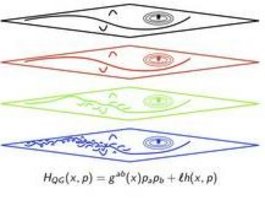
DFG Project 'Momentum dependent spacetime geometries: Traces of quantum gravity and fields in media'
This project establishes a rigorous mathematical framework for effective quantum spacetime geometries using Finsler and Hamilton geometry. It seeks to derive observable predictions (e.g., particle trajectories, time delays, light deflections), study classical and quantum field propagation on quantum spacetime, and develops the dynamics that determine the quantum spacetime geometry.
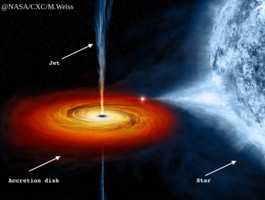
DFG project: General relativistic theory of charged accretion disk structures around black holes: influence of the (self)-electromagnetic interaction
Accretion disks around black holes and neutron stars, shaped by electromagnetic fields, provide insights into strong-gravity regimes. This project explores charged fluid disks, focusing on their self-interactions through analytic models and GRMHD simulations, aiming to unravel complex phenomena in disk structure, physics, and evolution near compact objects.





The list below shows the latest 25 publications of this research group. For the complete, searchable list of ZARM publications, please click more
2023
Modified and Quantum Gravity: From Theory to Experimental Searches on All Scales
In Christian Pfeifer and Claus Lämmerzahl, Editor, Volume 1017 from Lecture Notes in Physics
Publisher: Springer
2023
Modified particle lifetimes as a signature of deformed relativity
Physics Letters B, 848 :138380
2023
Muon accelerators—muon lifetime measurements as window to Planck scale physics
Class. Quantum Grav., 41 (1) :015008
2023
On the metrizability of m-Kropina spaces with closed null 1-form
J. Math. Phys., 64 (2) :022502
2023
Perturbations in Non-Flat Cosmology for f(T) gravity
Eur. Phys. J. C, 83 (3) :193
2023
Spontaneous scalarization of black holes in Gauss-Bonnet teleparallel gravity
Phys. Rev. D, 107 (10) :104013
2023
Publisher: APS
The Finsler Spacetime Condition for (α, β)-Metrics and Their Isometries
Universe, 9 (4) :198
2023
2022
A quick guide to spacetime symmetry and symmetric solutions in teleparallel gravity
e-Bulletin of Physics University of Brasilia, 10 (X Escola de Física Roberto A. Salmeron)
2022
Black Holes in f(T,B) Gravity: Exact and Perturbed Solutions
JCAP, 01 (01) :037
2022
Calculating black hole shadows: Review of analytical studies
Physics Reports, 947 :1
2022
Circular Geodesics in a New Generalization of q-Metric
Universe Mathematical Physics, 8 (3) :195
2022
Deformed relativistic kinematics on curved spacetime: a geometric approach
Eur. Phys. J. C, 82 (2) :150
2022
Dynamics of charged particles and quasi-periodic oscillations in the vicinity of a distorted, deformed compact object embedded in a uniform magnetic field
Monthly Notices of the Royal Astronomical Society, 882
2022
Exploring black holes as particle accelerators: hoop-radius, target particles and escaping conditions
JCAP, 5 (5) :023
2022
Finite Planck-scale-modified relativistic framework in Finsler geometry
Volume Corfu2021
2022
Finsler-based field theory – a mathematical foundation
J. Math. Phys., 63 (3) :032503
2022
Gravitational lensing in the charged NUT–de Sitter spacetime
Phys. Rev. D, 105 :064064
2022
Gravitational wave birefringence in spatially curved teleparallel cosmology
Phys. Lett. B, 834 :137437
2022
Hamiltonian Analysis In New General Relativity
2022
Light propagation in a plasma on an axially symmetric and stationary spacetime: Separability of the Hamilton–Jacobi equation and shadow
J. Math. Phys., 63 :092501
2022
Magnetized relativistic accretion disk around a spinning, electrically charged, accelerating black hole: Case of the C-metric
Physical Review D, 105 (10) :103017
2022
Morse-theoretical analysis of lensing in wormhole spacetimes
Phys. Rev. D, 105 :024027
2022
Observables from modified dispersion relations on curved spacetimes: circular orbits, redshift and lateshift
2022
Observables from spherically symmetric modified dispersion relations
Int. J. Geom. Meth. Mod. Phys., 19 (10) :2250155
2022
Observers’ measurements of time and length in premetric electrodynamics
2022